Your marketing generates leads. Your sales team works them. But deals stall. Conversations go cold. Prospects who seemed interested disappear.
The problem isn’t your product or your sales team. It’s that you’re trying to convince people to buy instead of creating conditions where buying feels natural.
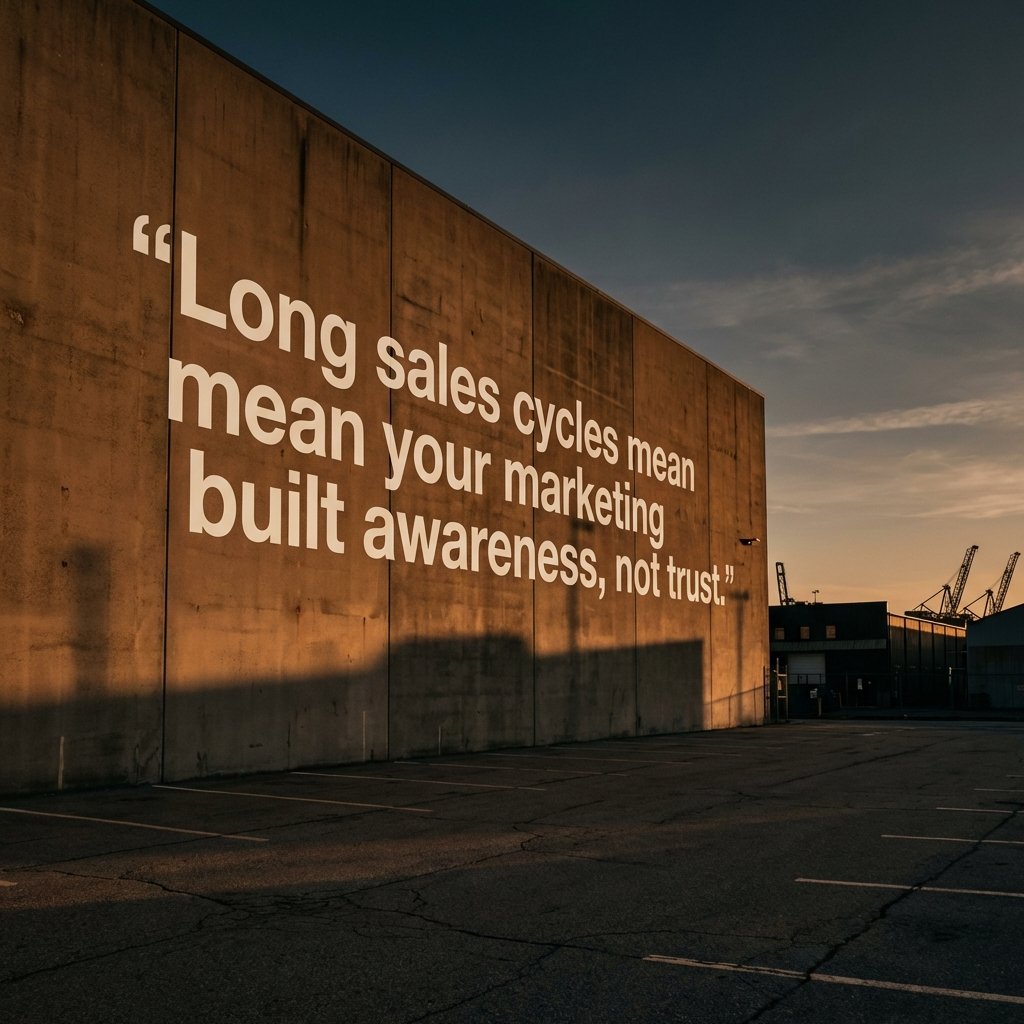
Companies tell me their sales cycles run months long.
When you’re talking to the right person with a real need, decisions happen fast. When they don’t, your marketing hasn’t built a buying environment.
Most companies confuse lead generation with environment creation. They’re not the same thing.
What a Buying Environment Does
A complete marketing program builds conditions where buying feels natural. Prospects arrive already trusting you. Sales conversations focus on logistics, not convincing.
Most marketing programs focus on generating leads. They measure clicks, downloads, form fills. But they don’t build the environment where those leads convert quickly.
The result? Long sales cycles. Stalled deals. Prospects who go dark after the first meeting.
You’re generating attention without building trust. Creating awareness without establishing authority.
Lead generation gets people into your funnel. A buying environment gets them out the other side as customers. One measures activity. The other eliminates friction.
The Gap Most Companies Miss
First, your prospect needs to feel understood before they explain themselves. Your content speaks to their specific situation, not generic industry problems.
This means your content addresses the specific challenges facing companies in their industry, at their stage, with their constraints. Not broad thought leadership. Not generic best practices. Specific problems they’re dealing with right now.
When a prospect reads your content and thinks “did they talk to my team?” you’ve nailed it. When they think “interesting perspective,” you haven’t.
Second, they need proof you’ve solved their exact problem before. Case studies from companies like theirs. Results in contexts they recognize.
Generic case studies don’t work here. “We helped a SaaS company grow revenue” means nothing. “We helped a Series B fintech company reduce churn from 8% to 3% during a market downturn” speaks to a specific prospect.
The more specific your proof, the faster trust builds. Prospects need to see themselves in your past wins.
Third, they need confidence in your process. 95% of purchasing decisions are subconscious. Driven by emotion first. They need to feel safe before they analyze ROI.
This means clear timelines. Transparent processes. No black box implementations. They need to know what happens after they sign, who does what, and when they’ll see results.
I’ve seen prospects with perfect logical fit walk away because the emotional foundation wasn’t there. ROI looked good. Features matched needs. Something felt off, so they delayed.
When you build the environment right, trust comes first. The logical evaluation becomes confirmation. They’re emotionally committed before they run the numbers.
What This Looks Like in Practice
Consistent visibility in the places your prospects already look for answers. Not everywhere. The right places with the right message.
Content that addresses their exact challenges. Social proof from companies like theirs. Regular engagement that demonstrates expertise without pitching.
You’re not posting everywhere. You’re present where your prospects spend time when they’re researching solutions. LinkedIn for B2B software. Industry forums. Communities where they ask questions.
Your content answers questions before prospects ask them. Your case studies mirror their situations. Your engagement shows you understand their world because you work in it every day.
43% of B2B sales leaders reported longer sales cycles over the past year. The average B2B sales cycle in 2024 runs 25% longer than five years ago.
Why Sales Cycles Keep Getting Longer
Your competitors aren’t building buying environments either. They’re still optimizing for leads, not conversions.
They’re measuring vanity metrics. Website traffic. Email open rates. Webinar registrations. None of those metrics tell you if you’re building trust.
The companies shortening their sales cycles are the ones building environments. They’re earning trust before the first call. They’re establishing authority through consistent, specific content. They’re making the emotional sale before discussing terms.
Common Mistakes That Break Buying Environments
Talking about your product too early. Prospects need to trust you before they care about features. Lead with their problems, not your solutions.
Creating content for SEO instead of prospects. Search engines don’t buy software. Writing for algorithms instead of humans builds traffic, not trust.
Using generic positioning. When you try to appeal to everyone, you appeal to no one. Specific beats broad every time.
Inconsistent presence. Posting once a month doesn’t build trust. Your prospects need to see you regularly in the places they already spend time.
Forgetting the emotional foundation. You’re not just sharing information. You’re building confidence that you understand their world and have solved their specific problems before.
At PulseSocial.ai, we build these environments systematically. Consistent presence. Targeted messaging. Content specific enough that prospects think “they get what we’re dealing with.”
The difference between a three-month sales cycle and a three-week sales cycle often comes down to how much trust you’ve built before the conversation starts.
When prospects reach out already believing you understand their problem and have solved it before, you’re not starting from zero. You’re starting from trust.
Trust builds before the first conversation. By the time prospects reach out, the buying environment has done its work. Your sales team closes deals. They don’t create belief.
Want to talk about building this for your team? Book a call here.
Related Posts

What Are You Afraid of Losing When Nothing Belongs to You?
20 January, 2026

Why Some People Never Break Under Pressure (And Most Do)
20 January, 2026