I was standing in my office five years ago when I got the call that changed everything.
The client I’d spent six months landing? Gone. Just walked. The deal I’d counted on to carry the quarter evaporated in a single conversation.
You know that tightness in your chest when something you thought was yours suddenly isn’t?
Yeah. That.
But here’s the thing I didn’t understand then: it was never mine to begin with.
The Stewardship Shift
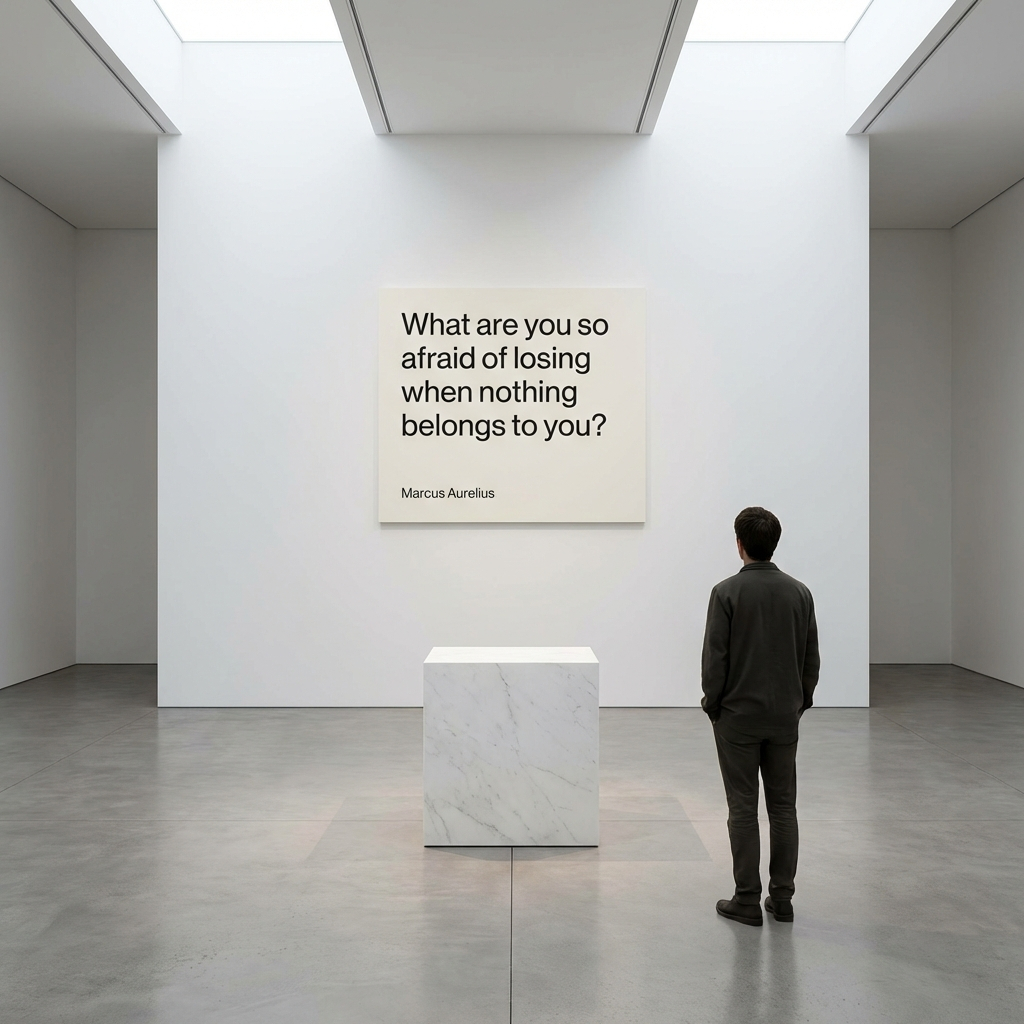
Marcus Aurelius asked a question that still cuts through two thousand years of human anxiety:
“What are you so afraid of losing when nothing belongs to you?”
He wasn’t being philosophical for the sake of philosophy. He was pointing at something most of us spend our entire lives avoiding.
We don’t own anything.
Not really.
Think about it:
Your body? You’re borrowing it. It changes every day, breaks down eventually, and returns to the elements.
Your relationships? People come into your life, stay for a season or a lifetime, and then the relationship transforms or ends.
Your opportunities? They show up, you steward them well or poorly, and they pass.
Even your time is on loan.
When you start viewing yourself as a temporary steward rather than a permanent owner, something fundamental shifts. The attachment that creates suffering starts to loosen.
And I’m not talking about detachment in the cold, distant sense. I’m talking about full engagement without the death grip.
Why Attachment Creates Suffering (And What to Do About It)
Here’s what the research tells us: attachment to the self creates suffering because we have strong demands toward things we cannot control.
When reality doesn’t match our demands? We become unhappy.
Everything is impermanent. Always changing. So attaching to outcomes is like trying to hold water in your fist.
I’ve watched revenue generators burn out because they attached their identity to their quota. I’ve seen entrepreneurs collapse when their business hit a rough patch because they believed they owned the outcome.
The stewardship mindset says something different:
I’m responsible for how I show up. I’m responsible for the effort, the strategy, the execution.
But I don’t own the result.
That might sound like giving up control.
It’s actually the opposite.
When you stop clinging to outcomes, you free up massive energy to focus on what you actually control: your actions, your response, your next move.
What this means for you: Stop measuring your worth by outcomes you can’t control. Start measuring it by the quality of your stewardship.
Memory Dividends: How Your Worst Days Become Your Best Assets
Here’s where it gets interesting.
The difficult periods in your life? The ones that felt like they might break you?
Those become fuel.
I call them memory dividends. The hard stories you survive don’t just fade into the background. They compound. They become the foundation for resilience, wisdom, and creative capacity.
Studies on post-traumatic growth show that as many as 89% of trauma survivors report at least one aspect of positive psychological change:
• Renewed appreciation for life
• Personal strength
• New possibilities
• Deeper relationships
The adversity you experience creates psychological fuel that pays dividends for decades.
But only if you process it correctly.
Only if you explore the difficult experience instead of suppressing it. Only if you let it reshape your understanding instead of hardening you.
When I lost that deal five years ago, I could have attached to the loss. I could have made it mean something about my worth, my capability, my future.
Instead, I started asking different questions:
• What did I learn about how I was positioning value?
• What did this reveal about the client’s actual readiness?
• What assumptions was I making that didn’t hold up under pressure?
That loss became a memory dividend. It shaped how I qualify opportunities now. It taught me to spot misalignment earlier. It gave me a story I can share with clients who are facing their own setbacks.
The difficult period didn’t just pass. It compounded into something useful.
What Stewardship Actually Looks Like in Real Life
So what does this actually look like when you’re running a business, leading a team, or trying to hit revenue targets?
It means you engage fully without the desperation that comes from ownership thinking.
Here’s how it shows up:
In client meetings: You show up prepared, present, and committed. But you’re not attached to whether they sign today or six months from now.
In building systems: You build the system, deploy the automation, construct the authority. But you’re not clinging to a specific timeline for when it produces results.
In relationships: You invest in the relationship, the team member, the partnership. But you’re not devastated when it transforms or ends because you understand that change is the only constant.
Stewardship means you care deeply while holding lightly.
It’s not indifference. It’s not passivity. It’s active engagement without the suffering that comes from trying to control what you can’t control.
Want proof this works?
After just one week of living a Stoic lifestyle, participants in one study reported a 10% increase in psychological well-being and a 10% decrease in negative emotions.
One week.
Just by shifting how they related to what they thought they owned.
The Paradox: Letting Go to Hold On Tighter
Marcus Aurelius also said: “Loss is nothing else but change, and change is Nature’s delight.”
When you understand that nothing belongs to you, you realize something profound:
You’re free to experience everything more fully.
You’re not holding back because you’re afraid of losing it. You’re not half-present because you’re worried about the future. You’re not paralyzed by the fear that this opportunity, this relationship, this moment might slip away.
You’re here. Fully. Because you know it’s temporary anyway.
That’s the paradox:
The less you cling, the more you can engage.
The less you try to own, the more you can steward well.
I’m not saying this is easy.
I’m saying it’s workable.
And the alternative? The constant anxiety of trying to hold onto things that were never yours? That’s exhausting.
I’ve been there. I’ve white-knuckled my way through quarters where I thought my worth was tied to the close rate. I’ve lost sleep over deals that didn’t matter six months later. I’ve attached my identity to outcomes I couldn’t control.
And every time, the attachment created more suffering than the actual loss ever did.
How to Build Your Memory Dividend Portfolio
So here’s what I’m starting to see more clearly.
The difficult periods you’re in right now?
They’re not just obstacles. They’re investments in your future psychological capacity.
Think about it:
The setback that feels crushing today becomes the story that fuels your resilience five years from now.
The failure that seems like the end becomes the foundation for the next breakthrough.
But only if you steward it correctly.
Here’s how:
1. Process the difficulty instead of suppressing it
Don’t ignore the pain. Sit with it. Understand it. Let it teach you.
2. Extract the lesson instead of just enduring the pain
Ask better questions. What did this reveal? What can I learn? How does this shape my next move?
3. Treat adversity as raw material for growth
Your memory dividends compound when you view setbacks as fuel, not evidence of inadequacy.
And that shift starts with understanding: you don’t own any of this. You’re stewarding it for a season. You’re responsible for how you show up, not for controlling the outcome.
That’s the freedom Marcus Aurelius was pointing toward.
Not the freedom from difficulty.
The freedom within it.
I’m still learning this.
Still catching myself attaching to outcomes I can’t control. Still reminding myself that I’m a steward, not an owner.
But the more I practice it, the more I see how much energy I was wasting on trying to hold onto things that were never mine.
And the more I lean into stewardship, the more I’m able to engage fully without the suffering that comes from clinging.
So let me ask you:
What are you holding onto that was never yours to begin with?
If you want to talk through how this applies to your business, your team, or the systems you’re building, I’m here. Book a call at PulseSocial.ai/contact or just send me a message. Sometimes the best clarity comes from talking it through with someone who’s been in the same place.
Related Posts
Create Buying Environments
10 February, 2026

Why Some People Never Break Under Pressure (And Most Do)
20 January, 2026