I watched a sales rep completely fall apart last month. Good person. Talented. But one difficult call derailed his entire week.
His numbers dropped. His energy tanked. He questioned everything about his approach. All because one prospect was rude to him on a Tuesday morning.
Then I watched another rep take three rejections in a row, feel the sting of each one, and still make the next call with the same energy. Same human emotions. Completely different outcome.
The difference wasn’t that one person felt less. It was that one person’s behavior stayed independent from what they felt.
The Performance Stability Problem Nobody Talks About
Most people’s output fluctuates wildly based on their emotional state. Great day? Great work. Bad morning? Everything suffers.
Research on performance stability defines this as consistency in task accuracy, throughput, and quality over time. High stability means you resist varying output despite emotional shifts. Low stability means your emotions directly control your results.
Here’s what I find fascinating. The study showed that people who practiced cognitive reappraisal had significantly less performance variability. The correlation was strong. But people who just suppressed their emotions? No meaningful difference.
That tells me something important. Pretending you don’t feel things doesn’t work. Changing how you interpret what you feel does.
Mental Toughness Isn’t What You Think It Is
I used to think mentally tough people just felt less. Turns out that’s completely wrong.
Research on mental toughness showed that people with high mental toughness don’t experience less intense emotions. They don’t magically avoid stress. They just have better coping resources when adversity hits.
The difference between resilience and mental toughness matters here. Resilience is about how fast you recover after getting knocked down. Mental toughness is about your threshold before you get knocked down in the first place. Both are trainable. Neither means you stop feeling.
I’ve started thinking about it in three layers. Resilience is your recovery speed. Toughness is your impact threshold. Depth is the magnitude of disruption you experience. You can work on all three independently.
The Reframe That Changes Everything
Elite athletes do something interesting with their emotions. They don’t suppress anxiety before a big competition. They reframe it as alertness.
Same physiological response. Faster heart rate. Heightened awareness. Adrenaline. But one interpretation paralyzes you and the other prepares you.
I’ve tested this in sales situations. When I feel nervous before a big pitch, I don’t try to calm down. I tell myself my body is getting ready to perform. It’s a small shift. But it changes whether that energy works for me or against me.
The research on emotion regulation shows something else worth noting. When emotional intensity increases, people default to rumination instead of reappraisal. They get stuck in the feeling instead of reframing it. That’s the moment where most people lose the ability to execute.
Baseline Acceptance as Competitive Advantage
Here’s what separates high performers from everyone else. They accept that some days will feel harder than others. They don’t wait for motivation. They don’t need perfect conditions.
They have a baseline. A minimum standard of execution that happens regardless of how they feel. Not their best work. Just their baseline.
I’ve watched this play out in my own business. Days when I feel energized and inspired? I do great work. Days when I’m tired or frustrated? I still do the baseline. Answer emails. Make the calls. Ship the thing I committed to shipping.
The compound effect of that consistency is massive. While other people are waiting to feel ready, you’re building momentum. Small actions repeated over time beat large actions taken occasionally.
Research on athletic performance shows that mental factors account for 80-90% of success at elite levels. Physical abilities become similar at the top. What separates people is the mental game. The ability to execute when it’s hard.
The Three Skills You Can Actually Train
First: Reappraisal over suppression. Don’t try to stop feeling things. Change what the feeling means. Anxiety becomes preparation. Frustration becomes information about what matters to you. Anger becomes energy you can redirect.
Second: Routine over inspiration. Build systems that don’t require you to feel motivated. Pre-game routines work for athletes because they create consistency regardless of emotional state. You need the same thing in your work. Actions that happen automatically when conditions are met.
Third: Baseline standards over peak performance. Define your minimum viable execution. What you do even on your worst days. That becomes your foundation. Everything above that is bonus.
I’m not saying emotions don’t matter. They absolutely do. They give you information. They connect you to what’s important. They make you human.
But letting them control your behavior? That’s optional. And expensive.
What This Actually Looks Like in Practice
When I work with clients on implementing AI systems, I see this pattern constantly. Some people hit one technical problem and spiral. They question the whole approach. They delay implementation. They wait for conditions to feel better.
Other people hit the same problem, feel the same frustration, and keep moving. They ask for help. They try a different approach. They execute through the difficulty.
The difference isn’t talent. It’s not experience. It’s the willingness to feel uncomfortable and still take the next step.
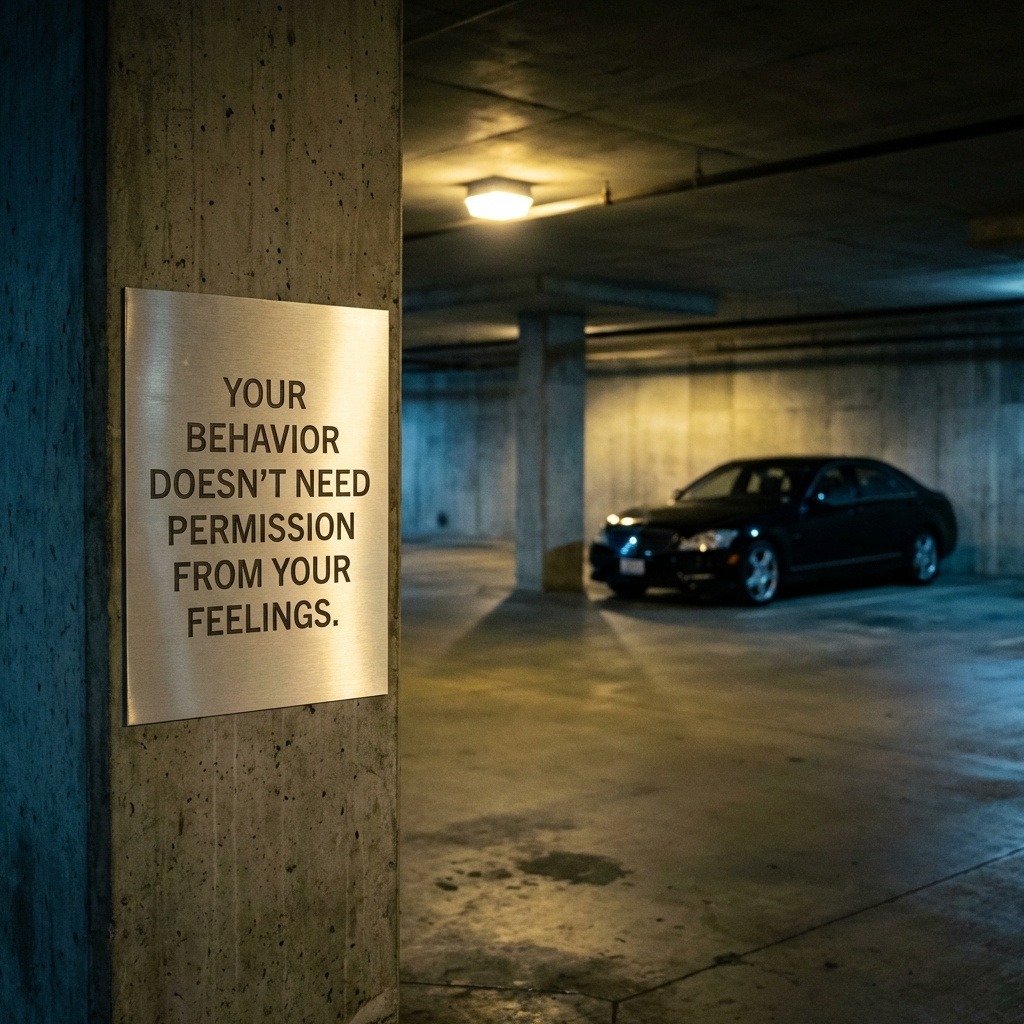
That’s behavioral independence from emotion. Feeling everything. Doing the work anyway.
I honestly think this is one of the most trainable competitive advantages that exists. Most people don’t even know it’s a skill. They think some people are just naturally more consistent. But research shows it’s learnable.
You practice reframing. You build routines. You establish baselines. You get better at executing regardless of how you feel. Not because feelings don’t matter, but because your behavior matters more.
If you’re experiencing performance inconsistency in your sales process or struggling to maintain execution velocity when conditions aren’t perfect, let’s talk. I help organizations build systems that reduce the gap between intention and action. You can reach me directly or book a call here: https://pulsesocial.ai/contact/
Related Posts
Create Buying Environments
10 February, 2026

What Are You Afraid of Losing When Nothing Belongs to You?
20 January, 2026